Jubilee Surgery
Whitton Corner Health and Social Care Centre, Percy Road, Whitton, Twickenham, TW2 6JL
Telephone: 0203 405 0840
Sorry, we're closed

Prescriptions
Manage prescriptions in the NHS App
Request your repeat prescriptions in the NHS App, without joining a phone queue or waiting for the surgery to open.
You can also change your chosen pharmacy, so your prescriptions are sent to a location that suits you and use a digital barcode to collect your medicine, without needing a paper prescription.
Download the NHS App or find the same services on the NHS website: https://www.nhs.uk/nhs-app/
How to request a repeat prescription in the NHS App | NHS (BSL)
Alternatively CLICK HERE to order your repeat prescriptions.
You may also order at the surgery reception or by post. Repeat prescription requests cannot be taken over the telephone.
Please indicate which pharmacy you wish your prescription to be sent electronically to. Once your prescription is received at the surgery it is then sent to a doctor to be authorised. The doctor needs to check your medical notes to ensure that the correct drug and amount is being issued. Therefore please allow 2 working days for your prescription to be processed – This may take longer after bank holidays
Medication reviews will be necessary at least annually to ensure safe prescribing of medication.
Self Care
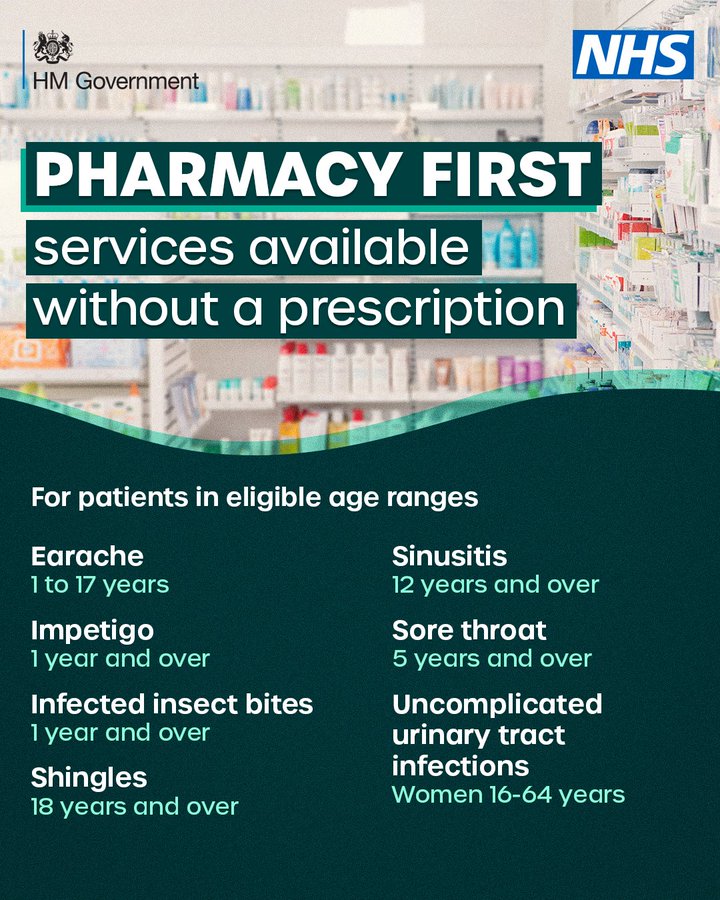
Jubilee Surgery is part of NHS SWL which is committed to delivering best value by ensuring that we use our resources well. To help us to support the implementation of the NHS England guidance ‘Conditions for which over the counter items should not routinely be prescribed in primary care‘ (March 2018), NHS SWL no longer supports the prescribing of health supplements and medications that can be bought over the counter for minor conditions, self-limiting and short-term illnesses.
Please follow link for more information and advice:
Self Care – SW London Integrated Medicines Optimisation Committee
Medicines in Nurseries and Schools
Schools and nurseries can only administer prescription medicines to a child when they have been prescribed by a doctor, dentist, nurse or pharmacist. Non-prescription medicines (over the counter medicines) do not require any written consent from a GP or other healthcare professional to allow school and nursery staff to administer them.
See attached information: Medicines-in-Nurseries-and-Schools.pdf
http://www.nhsbsa.nhs.uk/help-nhs-prescription-costs
Claustrophobia and refusal to have MRI scans
GPs will not issue prescriptions for sedating medications (such as diazepam) prior to MRI scans.
It’s estimated that every year, approximately two million MRI scans worldwide are not performed because of patients refusing to be scanned or terminating the scan early due to claustrophobia.
There are many resources online that can help prepare patients on what to expect during a scan including step by step explanations and videos of MRIs being performed. In more severe cases, the NHS website suggests that mild sedatives are an option for people with severe MRI anxiety. However, the MDU would recommend members to carefully consider the 2018 Royal College of Radiologists’ guidance, Sedation, analgesia and anesthesia in the radiology department, which states that a ‘trained and credentialed team should administer sedation and analgesia.’
There is also an emphasis on thorough pre-procedure assessment, planning and monitoring.
This means that the GP is not the right person to prescribe these medications. If they are needed, then this needs to be discussed with the radiology team.
Flight anxiety and prescribing of medications for flying
For the following reasons we will no longer be providing Diazepam or similar drugs for flight anxiety, and instead suggest the link to aviation industry recommended flight anxiety courses at the end of the page.
Flight anxiety does not come under the remit of General Medical Services as defined in the GP contract and so we are not obliged to prescribe for this. Patients who still wish to take benzodiazepines for flight anxiety are advised to consult with a private GP or travel clinic.
Initial use of benzodiazepines, including the well-known Diazepam also known as ‘Valium’, was enthusiastic and they were hailed as a wonder drug. However, it became increasingly clear that, as well as having short term deleterious effects on memory, co-ordination, concentration and reaction times, they were also addictive if used for a moderate time, with withdrawal leading to fits, hallucinations, agitation and confusion, and further had long-term effects on cognition and balance. Unfortunately, benzodiazepines have also become a widely used drug of abuse since they first came on the market.
Because of these reasons the use of benzodiazepines has been a lot more controlled around the world since the 1980-90s, especially in the UK. Diazepam in the UK is a Class C/Schedule IV controlled drug.
The following short guide outlines the issues surrounding its use with regards to flying and why the surgery no longer prescribes such medications for this purpose. People often come to us requesting the doctor or nurse to prescribe diazepam for fear of flying or assist with sleep during flights. Diazepam is a sedative, which means it makes you sleepy and more relaxed. There are several very good reasons why prescribing this drug is not recommended.
According to the prescribing guidelines doctors follow (British National Formulary) diazepam is contraindicated (not allowed) in treating phobic states. It also states that “the use of benzodiazepines to treat short-term ‘mild’ anxiety is inappropriate.” Your doctor would be taking a significant legal risk by prescribing against these guidelines. They are only licensed short term for a crisis in generalized anxiety. If this is the case, you should be getting proper care and support for your mental health and not going on a flight.
NICE guidelines suggest that medication should not be used for mild and self-limiting mental health disorders. In more significant anxiety related states, benzodiazepines, sedating antihistamines or antipsychotics should not be prescribed. Benzodiazepines are only advised for the short-term use for a crisis in generalised anxiety disorder in which case they are not fit to fly. Fear of flying in isolation is not a generalized anxiety disorder.
Although plane emergencies are a rare occurrence there are concerns about reduced awareness and reaction times for patients taking Diazepam which could pose a significant risk of not being able to react in a manner which could save their life in the event of an emergency on board necessitating evacuation.
The use of such sedative drugs can make you fall asleep, however when you do sleep it is an unnatural non-REM sleep. This means you won’t move around as much as during natural sleep. This can cause you to be at an increased risk of developing a blood clot (Deep Vein Thrombosis – DVT) in the leg or even the lungs. Blood clots are very dangerous and can even prove fatal. This risk is even greater if your flight is greater than 4 hours, the amount of time which has been shown to increase the risk of developing DVT whether in an airplane or elsewhere.
- Whilst most people find Diazepam sedating, a small number have paradoxical agitation and aggression. They can also cause disinhibition and lead you to behave in a way that you would not normally which can pose a risk on the plane. This could impact on your safety as well as that of other passengers and could also get you into trouble with the law. A similar effect can be seen with alcohol, which has led to people being removed from flights.
- A study published in 1997 from the Stanford University School of Medicine showed that there is evidence use of Benzodiazepines stops the normal adjustment response that would gradually lessen anxiety over time and therefore perpetuates and may increase anxiety in the long term, especially if used repeatedly.
- Diazepam and similar controlled drugs are illegal in several countries. They may be confiscated, or you may find yourself in trouble with the police. The passenger may also need to use a different strategy for the homeward bound journey and/or other legs of the journey.
- Diazepam stays in your system for quite a while. If your job requires you to submit to random drug testing, you may fail this having taken diazepam. Your driving may be impaired after your flight.
- It is important to declare all medical conditions and medications you take to your travel insurer. If not, there is a risk of nullifying any insurance policy you may have.
Opening Times
- Monday08:00am to 06:30pm
- Tuesday08:00am to 06:30pm
- Wednesday08:00am to 06:30pm
- Thursday08:00am to 06:30pm
- Friday08:00am to 06:30pm
- SaturdayCLOSED
- SundayCLOSED